
Vascular (Blood Flow) Assessment Brisbane
We provide comprehensive vascular assessments in West End to check blood flow to your feet and toes. Using hand-held Doppler to analyse pedal pulse waveforms and toe pressures testing to assess microvascular circulation, we help identify peripheral arterial disease (PAD) risk and your foot’s wound-healing potential.
Why Blood Flow Testing Matters?
Reduced blood flow can delay healing, increase infection risk and raise the chance of complications, especially in diabetes. Early detection allows timely referral and proactive care to keep you mobile and independent.
Annual screening for people with diabetes
Evaluation of cold, painful or pale feet
Assessment of non-healing ulcers or post-surgical wounds
Monitoring known peripheral arterial disease (PAD)
What We Test
Doppler assessment (macrovascular)
We place ultrasound gel over the dorsalis pedis and posterior tibial arteries and use a hand-held Doppler to listen to blood flow. We assess waveform quality (triphasic, biphasic, monophasic) and pulse strength on both feet.
Toe pressure (microvascular)
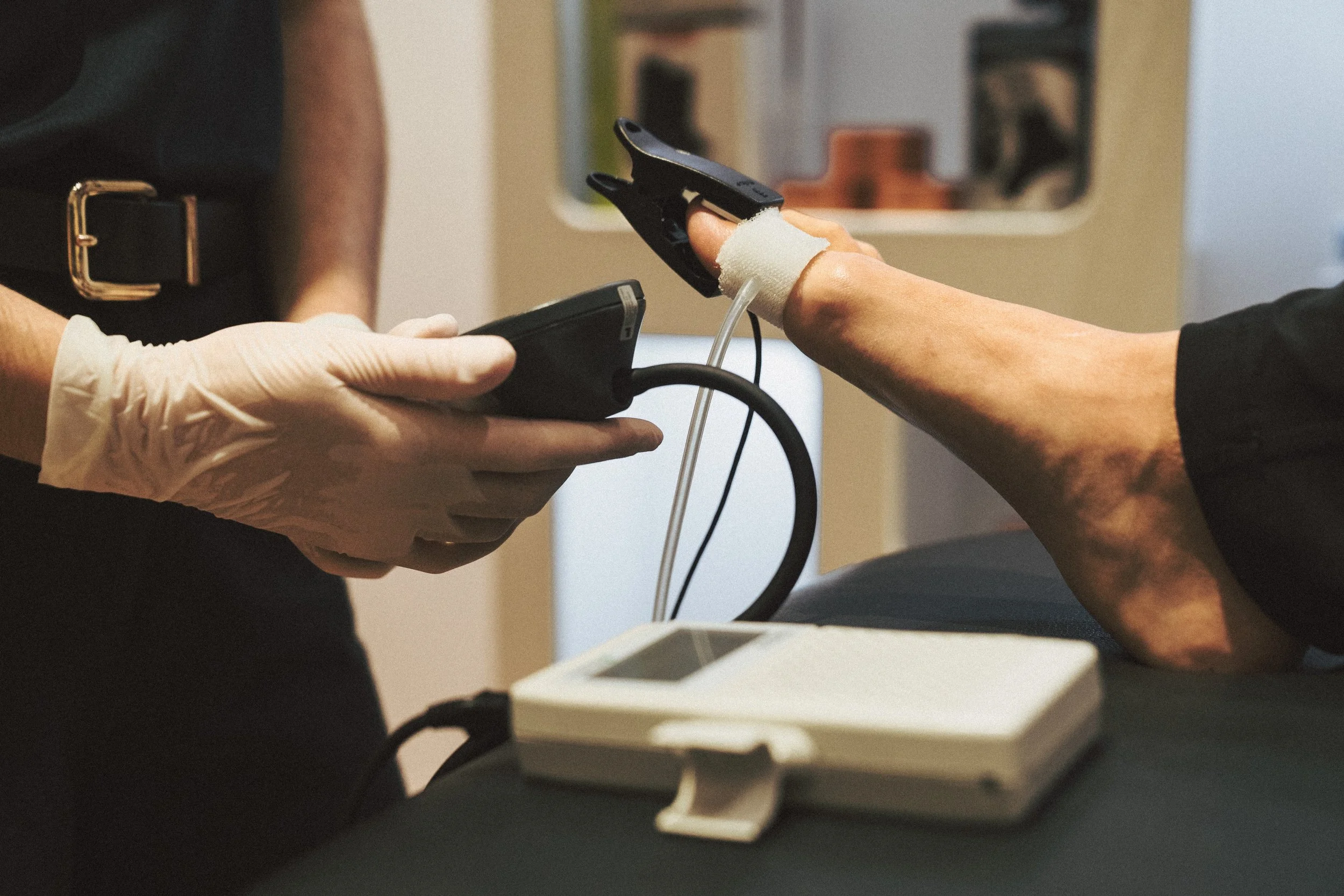
A small cuff is placed around the big toe (or second toe if required). A light sensor detects blood flow while the cuff inflates and deflates. This provides a toe systolic pressure (mmHg).
Toe pressure testing
How We Interpret Your Results
Doppler waveforms
Triphasic – typically indicates healthy arterial flow
Biphasic – may be normal for some adults; mild arterial change for others
Monophasic – suggests reduced arterial perfusion; further investigation is recommended
Toe pressures & TBI
Higher toe pressures and TBI closer to 1.0 generally indicate better perfusion
Lower values suggest reduced microvascular flow and higher risk of delayed healing
We explain your readings in plain language and coordinate referrals to your GP or a vascular specialist when needed.
What to Expect at Your Appointment
Health history and risk review (diabetes, smoking, cholesterol, blood pressure, pain with walking)
Foot skin, temperature and capillary refill checks
Doppler assessment of pedal pulses with waveform analysis
Toe pressure (TBI) testing using a small cuff and sensor
Clear explanation of results and next steps, plus a summary you can share with your GP
Other care if required
Appointment length: 30–40 minutes. Painless and non-invasive.
How to Prepare
Wear clothing that allows access to your arms, lower legs and big toes
Bring referral if you have one
Bring a list of medications and any previous vascular results
People with diabetes (frequency based on risk status)
Non-healing wounds or ulcers
Cold, pale or painful feet; cramping when walking (claudication)
Colour changes in toes, hair loss on legs, thickened nails
History of cardiovascular disease or PAD risk factors
Who Benefits from A Vascular Assessment?
Book your appointment today
Take the first step towards pain-free movement. Select your service to book in and let Stride Footcare help you get back on your feet.