Plantar Fasciitis (Heel Pain)
Are you struggling with persistent heel pain that feels worse in the morning?
What is Plantar Fasciitis and Symptoms to Look Out For
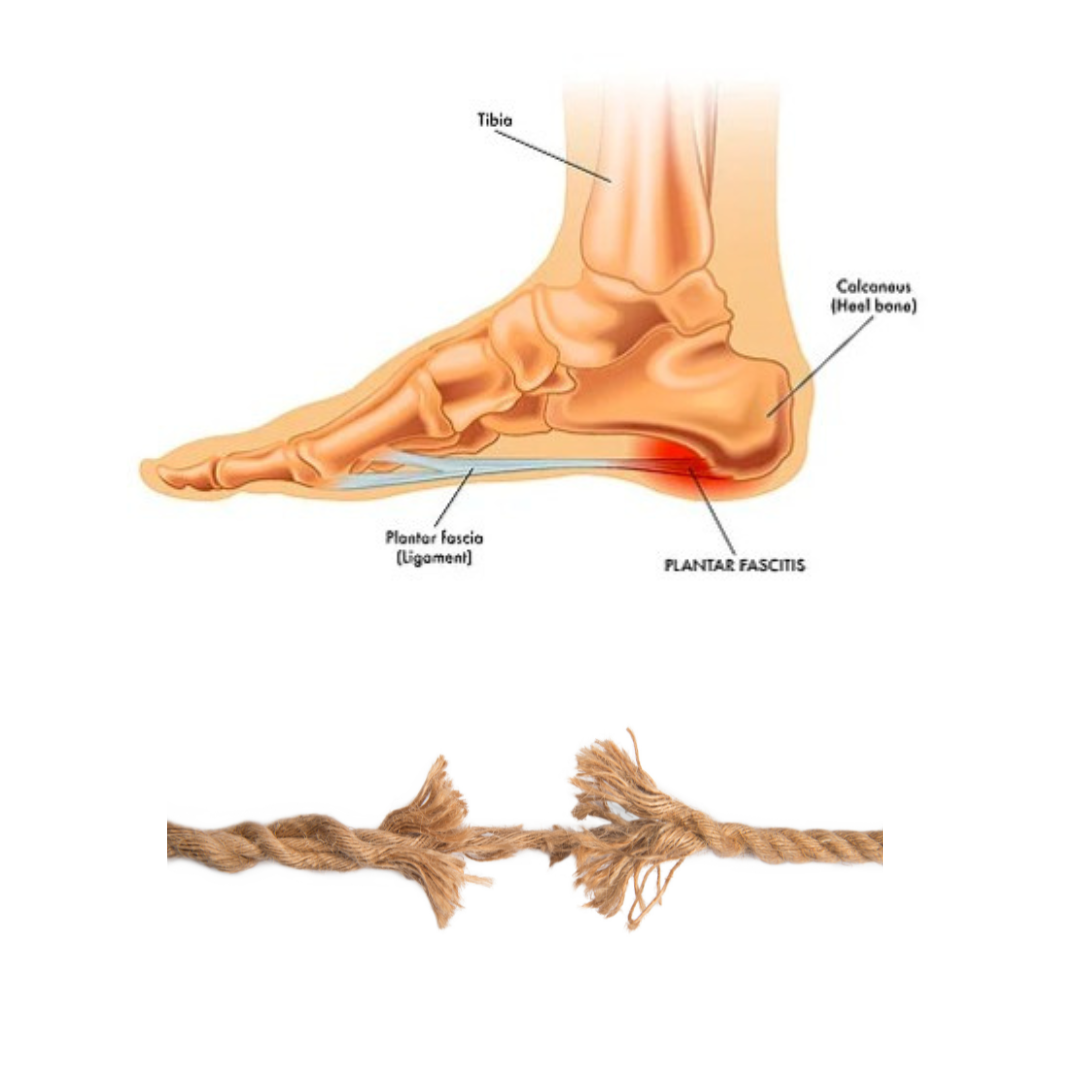
Most people think plantar fasciitis is an inflamed heel, but really it behaves more like a worn-out rope, rather than something that’s swollen and angry.
Your plantar fascia is a tough, fibrous band that’s meant to absorb load and keep your arch stable — the same way a rope supports weight.
Over time, with repeated strain, small fibres in the rope begin to fray, weaken and lose their resilience. They’re not inflamed in the classic sense. They’re simply overloaded and under-recovered.
That’s plantar fasciitis:
Not a fire that needs extinguishing, but a structure that needs time, strength and the right loading plan to repair itself.
The most common signs of plantar fasciitis include:
Sharp or stabbing pain at the bottom of the heel, especially with the first steps in the morning
Discomfort after long periods of standing or sitting
Pain that worsens with activity but eases with rest
What causes Plantar Fasciitis?
Plantar fasciitis typically develops due to overuse, poor foot mechanics, or inadequate footwear. You’re more likely to develop this condition if you:
Spend long hours on your feet
Have flat feet or high arches
Participate in high-impact sports like running
Wear unsupportive shoes
Have tight calf muscles or Achilles tendons
Have weak lower limb muscles
Click below to see our complete treatment guide including acute vs. chronic plantar fasciitis, how we diagnose it and expectations of our 12 week treatment timeline.
Our Plantar Fasciitis Treatments
At Stride Footcare, we offer a comprehensive biomechanical assessment to identify the root cause of your pain. Based on your results, we may recommend one or a combination of the following:
Shockwave Therapy: This non-invasive treatment uses sound waves to stimulate healing in the plantar fascia. It’s ideal for stubborn cases and helps prevent long-term damage or tearing.
Custom Foot Orthotics: Help redistribute pressure through the feet and correct poor biomechanics that may be contributing to your pain.
Stretching & Strengthening Exercises: We’ll guide you through specific exercises to improve foot flexibility and strength, supporting long-term recovery.
Footwear Advice: We offer tailored footwear recommendations and can connect you with trusted local shoe shops for work, casual, or running shoes.
Temporary treatment like in shoe padding and strapping the foot may be appropriate. We also offer compression sleeves to aid with inflammation.
If conservative treatment fails, we may consider referring for a cortisone injection, PRP (Platelet Rich Plasma) injection or surgery.