
Fat Pad Syndrome
The fat pads on your feet act as a shock absorber for your heel bone. When it's compromised, everyday activities like walking, standing, or running can become painful
What is Fat Pad Syndrome?
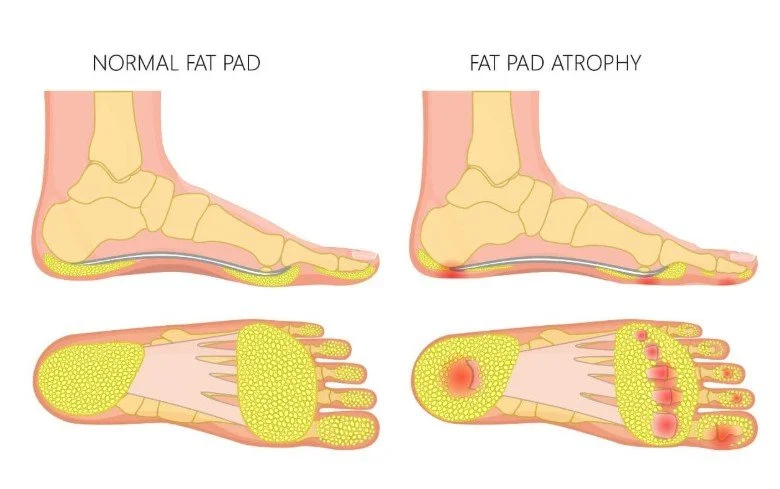
Fat Pad Syndrome, also known as heel fat pad atrophy or contusion, occurs when the natural cushioning under your heel becomes thinner or injured.
Think of the fat pad under your heel like the cushion in a running shoe or a foam mat you stand on in the kitchen.
When it's thick and supportive, it absorbs shock and protects your heel bone every time your foot hits the ground. But over time—just like an old cushion—it can wear down, flatten, or shift out of place. When that happens, there’s not enough padding to protect your heel, so walking on hard surfaces starts to feel like stepping on concrete with no shoes on.
That’s fat pad syndrome: your heel has lost its natural padding, and your bones are taking the brunt of the impact. When it's compromised, everyday activities like walking, standing, or running can become painful and uncomfortable.
What Causes Fat Pad Syndrome?
Fat pad syndrome is often caused by repetitive impact or degeneration of the fat pad. Common causes include:
Walking or running on hard surfaces
Age-related thinning of the fat pad
Obesity or increased body weight
Poorly cushioned footwear
Past heel injuries
Excessive standing or walking at work
Unlike plantar fasciitis or heel spurs, which affect the connective tissue or bone, fat pad syndrome specifically involves the soft tissue cushioning under the heel.
Common Symptoms
Symptoms usually present as:
Deep, aching heel pain, especially when standing or walking barefoot
Pain in the centre of the heel, rather than the sides or arch
Pain that worsens on hard floors or tiles
Tenderness on direct pressure to the heel
If your pain is sharp or focused in the arch or inside of the heel, it could be related to plantar fasciitis or heel spurs, which we also treat.
How We Treat Fat Pad Syndrome at Stride Footcare
At Stride Footcare, we take a tailored approach to heel pain treatment. Your fat pad syndrome treatment may include:
Custom foot orthotics designed to cushion and redistribute pressure and add prescription cushioning
Heel cups or padding to support the fat pad during walking
Footwear assessment and recommendations
Activity modification advice to reduce impact stress
Taping techniques to reduce strain on the heel
Lifestyle tips to manage contributing factors such as weight or standing time